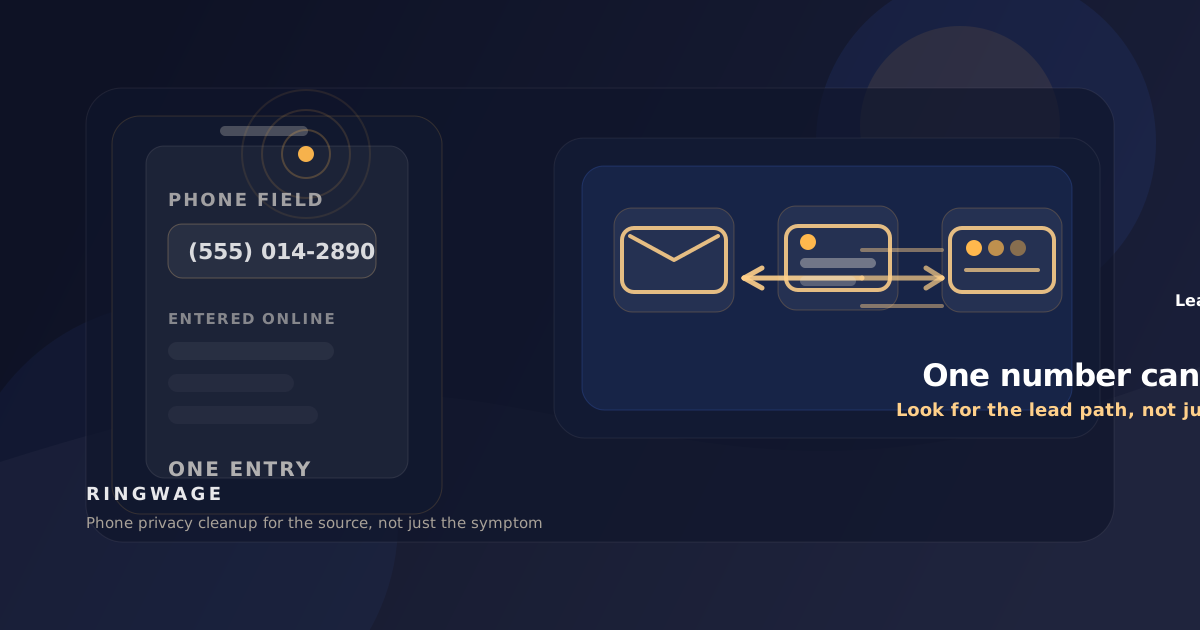
If spam calls started after you entered your phone number online, the timing is useful but not conclusive. The number may have gone into a quote form, inquiry page, registration screen, checkout flow, or public listing. From there, it can move into a partner list, broker profile, or scraped copy.
That does not prove a specific site sold your number, and it does not mean every caller came from the same source. It does mean the page where you typed the number is worth checking first.
Why the timing matters
A freshly entered number is valuable because it looks active. Lead buyers, marketers, and robocall operators want contact records that still seem reachable. If your calls started within hours or days of a form submission, the source may be a lead flow rather than a random call campaign. Compare that with spam calls after filling out an online form and spam calls after signing up online for the neighboring patterns.
The trigger can also be broader than one site. If you entered a number on a comparison page, local service page, quote request, or public contact page, the number may have been copied into a downstream list even if the original company never called you itself.
How one entry can spread
Once a number is submitted online, a few different paths are common:
- Partner sharing: A form can include consent language that allows the site to share your number with marketing partners or affiliates.
- Broker enrichment: Data brokers can append names, addresses, or household data and resell the record to call centers.
- Public copies: If the number lives on a page that search engines can crawl, copies can show up in caches, directories, or people-search sites.
- Lead resale: One entry can be sold to more than one buyer, so calls arrive from different numbers even when the source is the same.
- Cross-channel reuse: The same record can also trigger emails, texts, or account-style messages if the page collected multiple contact fields.
That is why the same phone number can feel like it is being "followed" by different campaigns. It usually is not one caller. It is one contact profile moving through more than one system. If the same entry also started emails, compare that pattern with why spam calls and emails start at the same time.
What to check first
Start with the page itself. Look for consent language near the submit button, especially lines about partners, affiliates, automated calls, or follow-up messages. If you were using a comparison site or a quote page, the sharing path may have been broader than the first company you intended to contact.
Then search your number in quotes, with and without punctuation, and add your name or city. If the number appears on public pages, broker profiles, or old listings, the calls may be drawing from more than the original form. For a broader search workflow, see why you should search your phone number in quotes and whether data brokers can sell your phone number.
If the calls mention a specific category, such as insurance, home services, loans, benefits, or vehicle offers, note that topic. The topic often says more about the lead source than the caller ID does. If the form was an insurance quote page, compare it with insurance quote spam calls and emails.
What the timing does not prove
The timing does not prove you were definitely scammed. It does not prove every site sold your number. It does not prove that one caller saw your exact form submission. A legitimate site can still share leads broadly, and a public page can be copied by scrapers without anyone directly handing over your data.
What the timing does prove is that your phone number likely entered a contact path worth tracing. If the calls started soon after the entry, treat that page as the starting point, not the final explanation.
How to reduce the calls
Remove or edit the original source if you control it. If the number is on a public page, update it or replace it with a contact form or business line. If the number was entered into a form with partner language, look for opt-out, unsubscribe, or privacy-request steps on that site. If broker listings already show the number, use the cleanup path in how to remove your phone number from the internet.
While you clean up, reduce confirmation. Let unknown calls go to voicemail. Do not press keypad prompts on robocalls. Do not confirm your name, address, or account details to an unexpected caller. If a caller claims to be from a real company, hang up and call back through a number you find yourself.
See whether the number is already in motion
RingWage's free preview and one-time $20 Phone Protection Report can help you check whether the pattern looks like a lead flow, public exposure, or broker profile before you spend time on cleanup.
Preview for freeWhat to do over the next seven days
Do not measure progress by whether every call stops immediately. Spam-call systems reuse lists, rotate caller IDs, and test numbers at different times of day. A better short-term goal is to reduce confirmation, capture patterns, and remove the highest-visibility places where your phone number is tied to your identity.
For one week, keep a simple log: date, time, displayed caller ID, voicemail status, caller label, and the topic if one is clear. This helps separate random robocalls from a specific lead-list pattern. A cluster around insurance, Medicare, vehicle warranties, debt, solar, or home services usually points to a category of lead data, not just one bad caller. If the volume is already extreme, compare it with getting 10 spam calls a day.
At the same time, avoid giving suspicious callers more signal. Let unknown calls go to voicemail. Do not press keypad prompts on robocalls. Do not confirm your name, address, account details, Medicare information, or payment details for an unexpected caller. If a real company may be involved, move the conversation to an official website, app, statement, or customer-service number that you find yourself.
Why blocking alone is not enough
Blocking is useful, but it only handles the last step: the number that reached your phone today. It does not remove your number from a people-search profile, revoke a lead form consent trail, erase a broker record, or stop a caller from using a different spoofed caller ID tomorrow. That is why the same category of calls can continue even after you block dozens of numbers. For a comparison of the edge layer and the upstream layer, read why blocking calls is not enough.
A stronger plan combines immediate defenses with upstream cleanup. The immediate layer is call screening, carrier spam filtering, blocking, and reporting. The upstream layer is finding where your number is publicly listed, where you may have granted contact consent, and which call topics reveal the type of list your number may be on.
How RingWage fits into the cleanup
RingWage sells a one-time $20 Phone Protection Report. The report is built around the practical exposure question: where might this number be visible, what spam-risk pattern is showing up, and what should be cleaned up first? It does not replace carrier blocking or official fraud reporting. It gives you a prioritized checklist so you are not guessing which broker opt-outs, Do-Not-Call steps, and call-handling changes matter most. If you want the bigger exposure map, see what a phone privacy audit is.
How to avoid feeding the next list
Before giving your phone number to another form, pause and check what the form is really asking for. If the phone field is optional, leave it blank. If the page mentions partners, affiliates, automated calls, comparison quotes, or eligibility checks, assume the number may be shared beyond the first company. Use the official website of the company you actually want to contact instead of a generic comparison page when possible.
For accounts that genuinely need a phone number, use stronger account security and keep the number out of public profiles. For public-facing work, consider a dedicated business line rather than a personal number. The goal is not to hide from every legitimate contact; it is to stop making your personal number the easiest identifier for marketers, brokers, and scammers to connect across databases.
When the issue needs escalation
Most spam-call problems can be handled with screening, reporting, opt-outs, and consent cleanup. Escalate faster if the caller threatens you, impersonates law enforcement or a government agency, asks for payment or one-time codes, references sensitive medical or financial information, or if you already shared account details. In those cases, contact the real institution through official channels and preserve call records before deleting anything.
Keep the evidence lightweight but consistent: one screenshot or voicemail note, the displayed number, the claimed company, and what the caller wanted. That record makes it easier to spot repeat scripts, report accurately, and decide whether the issue is simple nuisance calling or something more targeted.